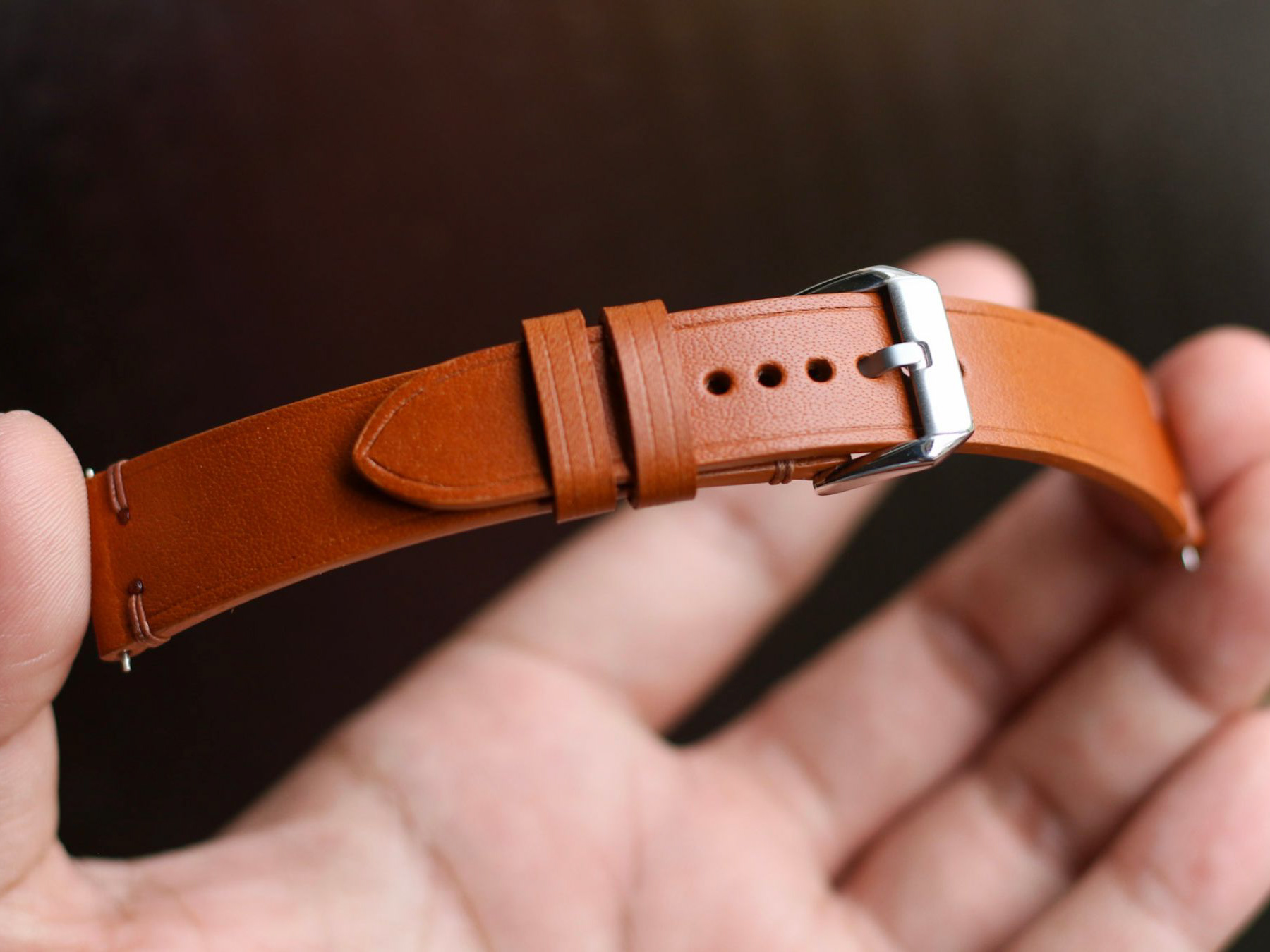
A quality leather strap should age beautifully, not wear out prematurely.
Just like copper, brass and wood, leather also develops nice patina over time. It gives your strap its own character in a way that even two straps made from the same leather can look very different after years of usage. But not taking care of your leather straps properly can lead to cracking, stretching, discolouration, and sometimes unpleasant odours.
In this post, we'll talk about some simple habits and a few minor tasks that can prolong the life of your leather investments—the watch straps.
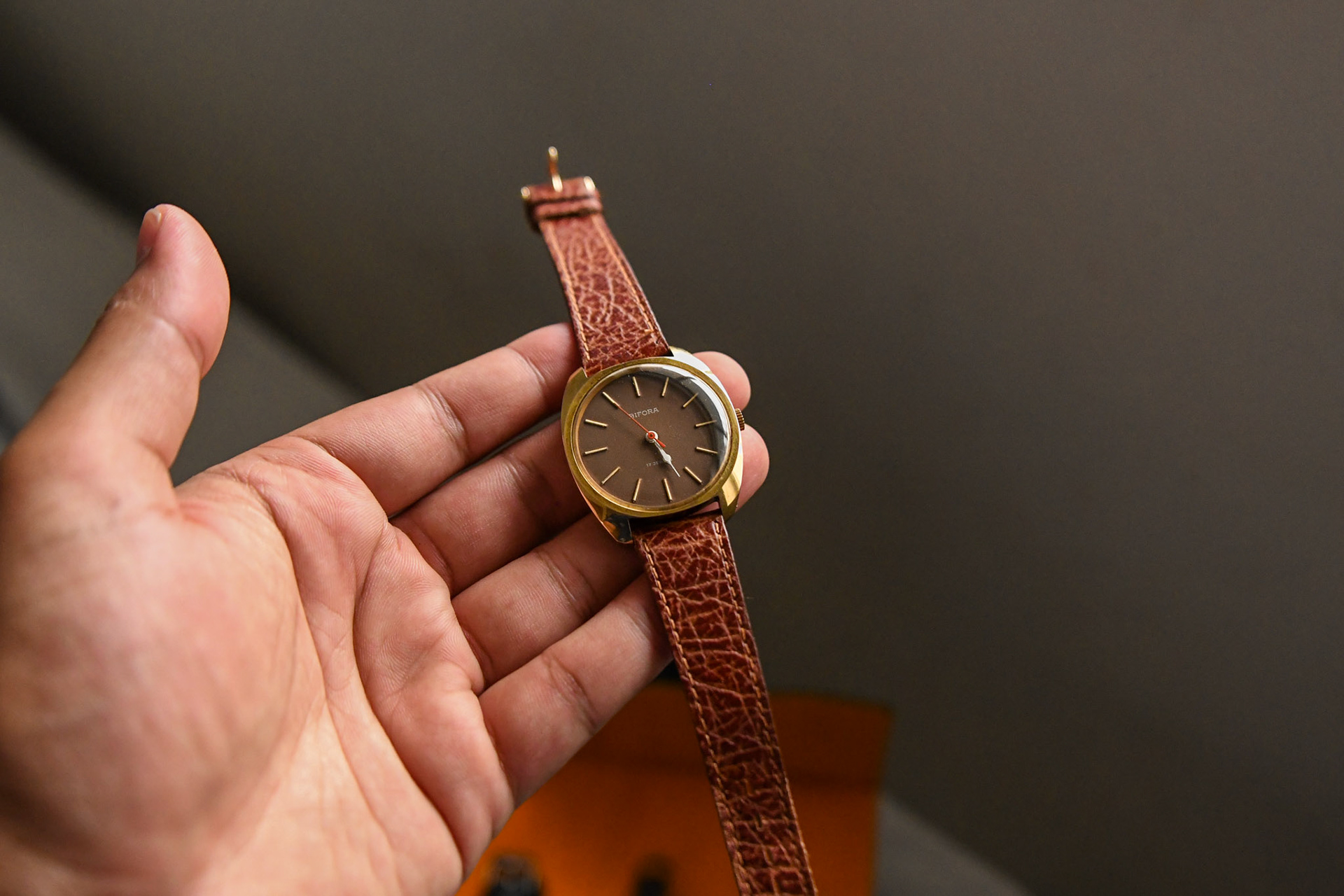
A quality leather strap should age gracefully, developing character rather than wear.
Understand your strap before caring for it
Leather is a natural material. But it goes through many processing and finishing stages before it comes to the atelier as hides and finally makes its way to you as end products. Different processing changes the characteristics of the hides, making them behave differently under the same weather conditions. So you need to understand your leather before you take care of it.
Leather can be categorised in many ways, but to keep things simple, we'll talk about the three most important ones, the ones you must know as an investor in leather goods.
1. The Source
The first thing that should be very clear is your source. We only work with ethically sourced hides, which come from LWG-certified tanneries. Now, depending on what type of strap you are looking for, hides can be from a bovine source or from an exotic source. Apart from the upper layer of your strap, you should also look at the lining, which can come from a bovine, ovine, caprine or porcine source.
2. The Tanning
This is an important process that decides what type of leather care products you can apply to your beloved leather goods. In the simplest words, tanning means treating the hide so that it does not rot or shrink like any other natural material. The actual process is very scientific and sometimes can be quite long, weeks or even months long. Primarily, you'll come across two main types of leather:
• Vegetable tanned, where natural plant tannins, tree barks, are used. These hides are typically a bit stiff, eco-friendly, patina beautifully, and smell traditional. Often takes 4-8 weeks for the process to complete.
• Chrome tanned, where chromium-based salts are used, takes only days to make, resulting in soft, flexible, and sometimes water-resistant leather.
Apart from these two, other notable options are mixed tanning, self-explanatory and chrome-free tanning—used for lining leather, suitable for people with chromium salt allergies.
3. The Split
After the tanning is done, the processed hide goes into the splitting stage to get to the desired thickness and to get the most out of one hide. The terminology is a bit confusing, bear with me.
• First comes the full-grain leather, which contains the complete, untouched top layer. It is the most durable, breathable, and expensive grade. This type can easily be identified by visible pores, natural marks and skin imperfections.
• When the top layer is removed by fine splitting and sanding to remove imperfections, it becomes top-grain leather. It is more uniform but slightly less durable than full-grain. This type comes in various finishes like smooth, napped, milled, stamped or printed.
• The fibrous bottom layer left after the top grain is split off is called a split leather or suede. It is napped and soft, but not very durable.
• At the bottom of the list, we have bonded leather, or more commonly known as the "genuine leather". Contrary to its name, this type contains the least amount of actual leather as it is made from shredded leather scraps being glued together with polyurethane and thus is of the lowest quality.
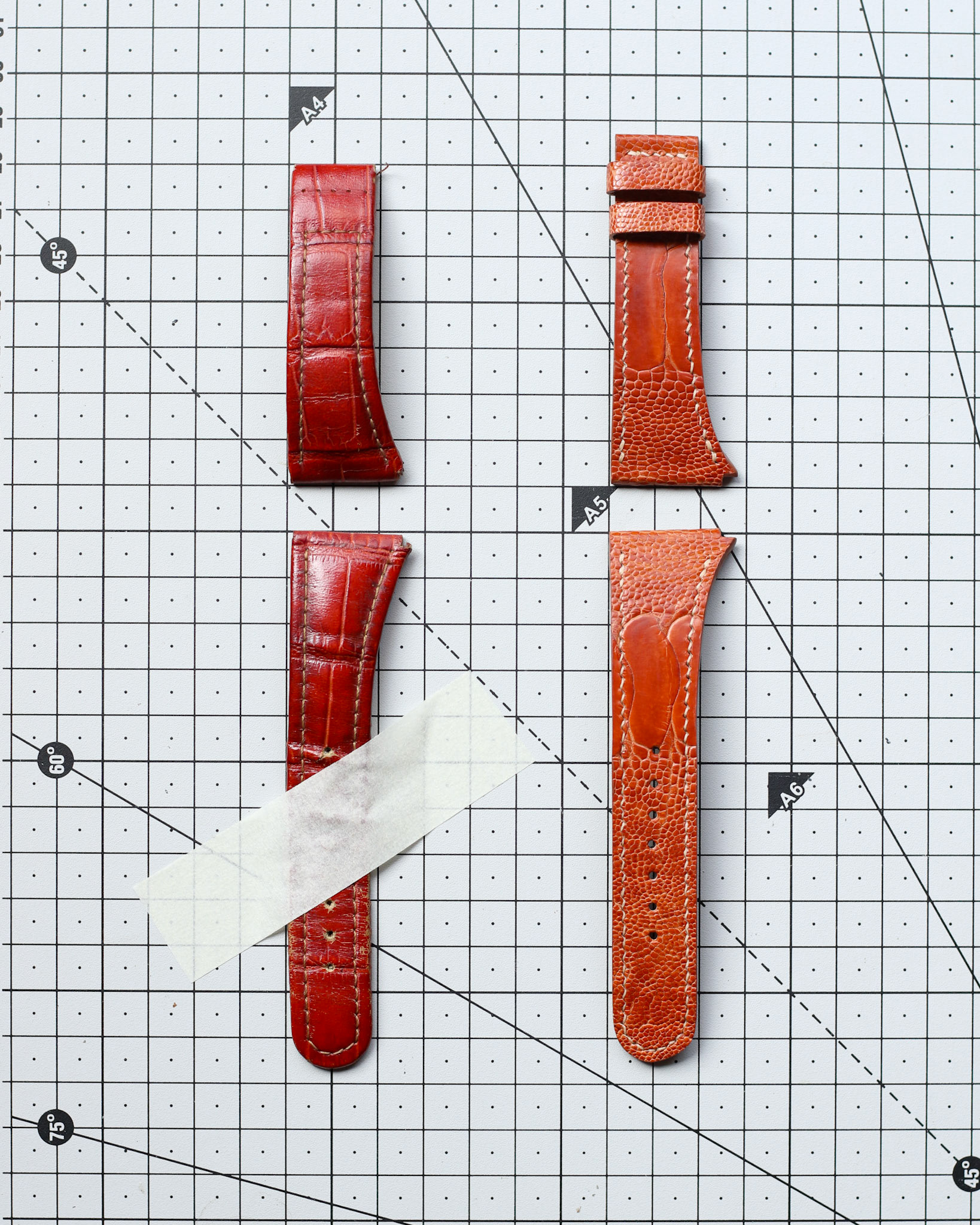
Patina is a sign of age and use; makes your strap unique to you.
The dos of leather strap care
Now that you understand your leather, we will go through some simple habits that can really help your straps age normally, instead of getting damaged prematurely.
1. Do keep it dry
As obvious as it sounds, the most common thing that kills leather straps faster is water or excess moisture. Water weakens the leather fibres and can cause mould formation. Avoid prolonged rain exposure, excess splashing during washing hands or any other direct long-form water exposure, especially for your full-grain leather straps, as they absorb moisture faster.
2. Do wipe it down regularly
After a long wrist time, especially during the summer, wipe down the lining (the back side) with a soft dry cloth. This removes sweat, dust and skin oils as these can cause permanent spots on veg-tanned leather.
3. Do rotate between straps
As you are getting into bespoke straps, chances are you have a collection of straps as well. Try to rotate them. It gives the leather time to breathe and keeps it in shape, quite literally. Also makes you and your straps happy.
4. Do store it properly
First of all, after a full day's wear, keep it in an airy place for a couple of hours before storing it. And for storage, use a cool and dry place. If it is a sealed box, please put a few silica gel packets inside.
5. Do condition occasionally
Some leathers need conditioning while others need cleaning. Here is a list of essentials from reputable sources:
• If your veg-tanned full-grain leather seems dry, apply some Smith's Leather Balm with a dry cloth or a soft, clean shoe brush.
• To prevent mould on veg-tanned leather, try the Columbus Leather Cream and for chrome-tanned leather, try the Columbus New Neo Cleaner.
• For cleaning your nubuck and suede goods, you may use the Columbus Suede Lotion.
It is always recommended to double-check the leather type with your craftsman so that you can get the right product for it, and consult with the supplier for the best application methods.
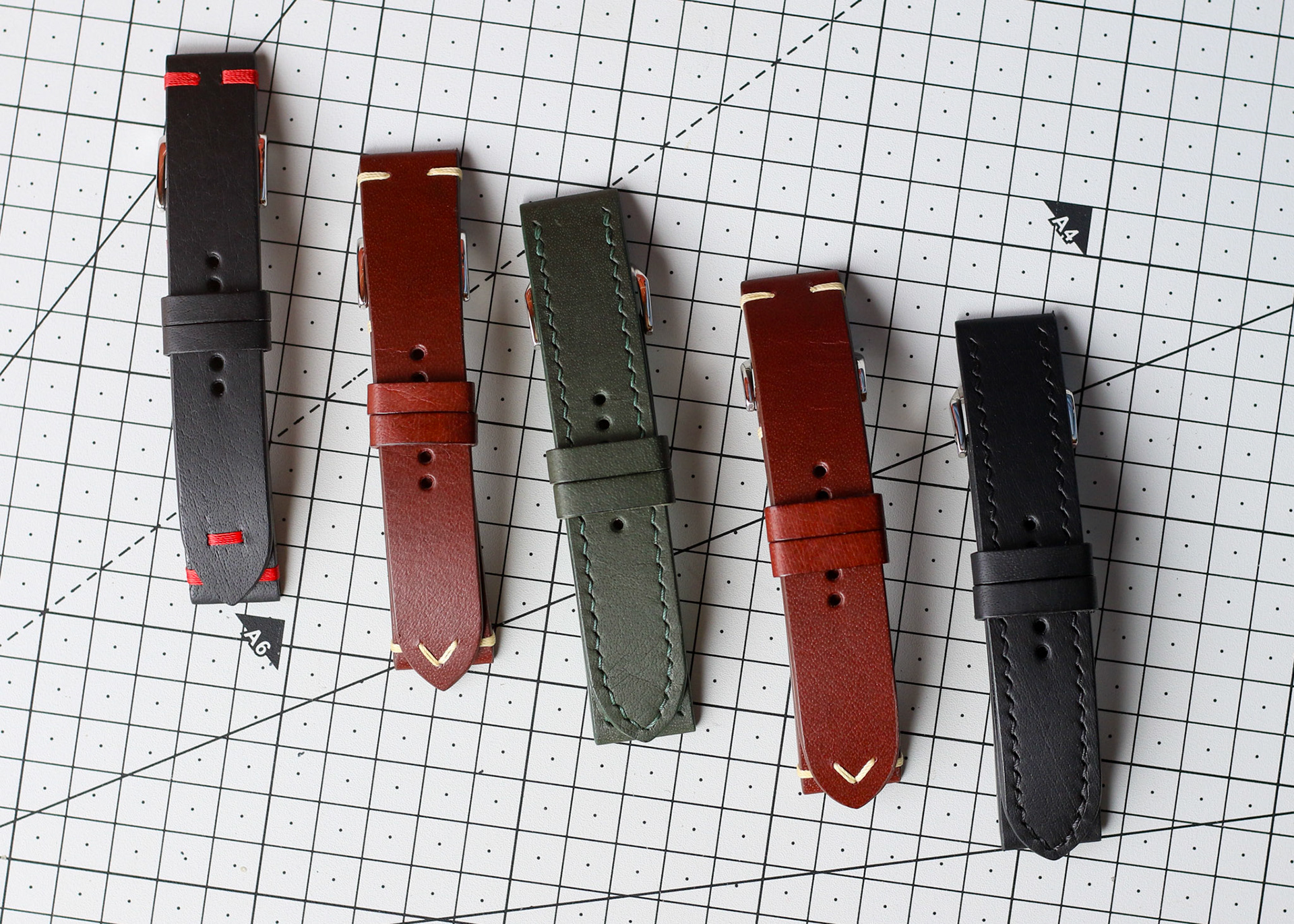
Rotating straps not only changes the look of a watch, but also extends the life of each strap.
The don'ts that shorten strap life
1. Don't shower with it
Again, long water exposure equals unhappy leather straps. No shower, swimming, intense workout or sauna with leather straps. Sweat and salt buildup are bad for both your watch and the strap. Please use your rubber bands or metal bracelets for those activities.
2. Don't dry leather with heat
You should never use a hair dryer or heater to dry a wet strap. You should also avoid direct sun exposure as it leads to discolouration and cracking of the leather.
3. Don't use household cleaners
Avoid IPA or alcohol-based cleaning agents, as these can dry up your straps at best and, at worst, can lead to discolouration or destruction of the finishing of your top grain leather straps.
4. Don't overcondition
Many owners believe more conditioner equals better care. Which isn't the case. Excess conditions soften leather excessively, can weaken the structure of your strap and attract dirt.
5. Don't ignore early signs of wear
While you can take good care on your own, sometimes a professional intervention is required for your leather goods. If you are noticing surface cracking, loose stitching, persistent odour or excessive stretching, it is time to talk to your leather craftsman to check the viable options.
Common leather strap care mistakes
We have covered our bases, but to sum it up, you should avoid:
• Sleeping with the watch on every night
• Wearing the same straps every day
• Leaving it in a hot car
• Storing it while damp
• Using household cleaning agents
These simple mistakes can make your full-grain straps look like genuine leather straps in no time.
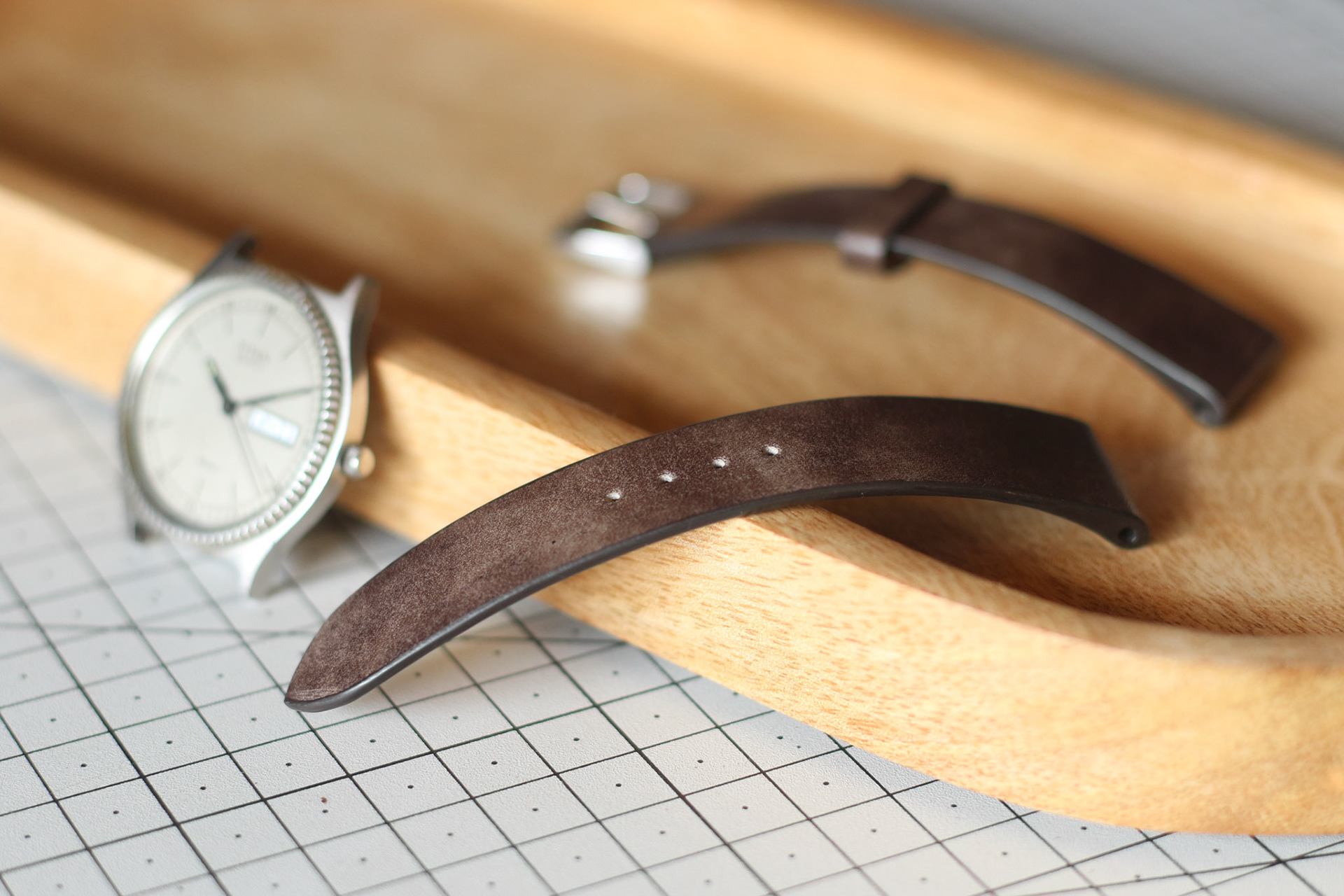
Well-cared-for leather develops a character that is uniquely its owner's.
How long does a quality strap last?
While a full-grain hide can last generations, the end product, your strap, is a combination of many layers glued or stitched together, going through stress every time you wear it. So realistically speaking, depending on the type of leather and material used, a good strap should last 1-3 years on daily wear. But in case of rotational or occasional wear, it can last 3-5 years or even more. A properly maintained handmade strap often ages gracefully rather than simply "wear out".
A well-made leather strap is often one of the few accessories that becomes more personal with age. And with proper care, the patina and marks it acquires tell a story—one that is uniquely yours.
June 16, 2026
By Arijit Mukhopadhyay
Founder, Craftsman & Collector
Founder, Craftsman & Collector
• • •
Want to get notified about the next post?